
Introduction
In today’s digital world, computers and mobile devices are part of daily life. We use them for work, study, communication, and entertainment. However, as we install more programs and store more data, our systems can become slow, cluttered, or even unsafe. This is where Utility Software Compare becomes important. It helps users understand different utility tools and choose the right one for their needs.
Utility software is designed to maintain, manage, and improve system performance. Some tools clean junk files, others protect against malware, and some help manage storage or system updates. Because there are many options available, comparing utility software is not easy for beginners. Each tool claims to be the best, fastest, or safest. Without proper knowledge, users may install unnecessary or risky software.
This guide is written in simple English for beginners and intermediate users. It explains what utility software is, why comparison matters, and how to compare tools step by step. The goal is to help you make smart decisions without confusion. You will also learn about benefits, risks, common mistakes, and expert tips.
By the end of this article, you will clearly understand how Utility Software Compare works and how to select reliable tools for your system. Whether you use a home computer or a work device, this guide will help you keep it clean, fast, and secure in a practical way.
What is Utility Software Compare?
Utility Software Compare is the process of analyzing and evaluating different utility software tools to find the best option for specific needs. Utility software includes programs that help manage, optimize, protect, and maintain a computer or device.
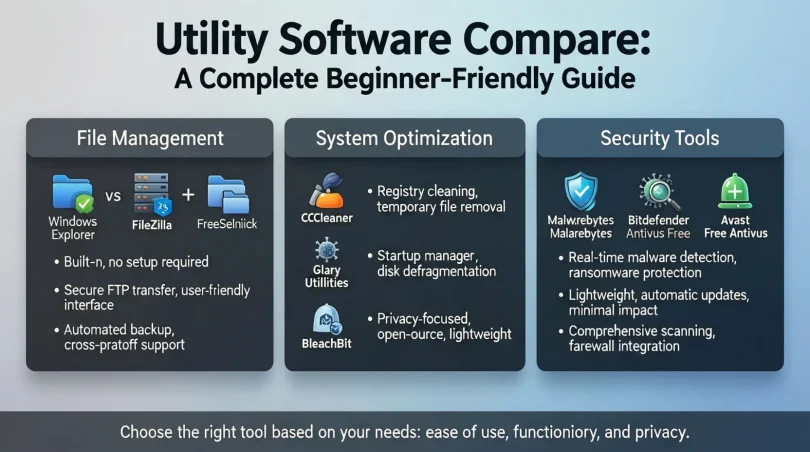
These tools are not designed for creating content or browsing the internet. Instead, they work in the background to improve system health. Examples include disk cleaners, antivirus tools, backup software, file managers, and system monitors.
When users compare utility software, they look at features, performance, ease of use, pricing, and safety. Some tools are free, while others require payment. Some are suitable for beginners, while others are designed for advanced users.
Utility Software Compare helps users avoid poor choices. It allows them to select tools that match their system requirements and personal skills. Without comparison, users may install software that slows down their device or creates security risks.
In simple terms, Utility Software Compare is about making informed decisions before installing system tools.
Why is Utility Software Compare Important?

Utility Software Compare is important because not all utility tools offer the same quality or value. Some software may look helpful but can cause more harm than good.
First, comparison saves time. Instead of testing many tools, users can narrow down options by comparing features and reviews. This helps them choose faster.
Second, it improves system safety. Some utility software contains hidden ads or unwanted programs. Comparing software helps users avoid unsafe tools.
Third, it saves money. Many paid tools offer features that free tools already provide. By comparing, users can avoid spending on unnecessary software.
Fourth, it improves performance. Choosing the right utility software can speed up a system, free storage space, and reduce errors.
Finally, Utility Software Compare builds confidence. Users feel more comfortable managing their devices when they understand what tools they are using and why.
Detailed Step-by-Step Guide
Step 1: Identify Your System Needs
Before comparing software, understand what your system needs. Some common needs include cleaning junk files, improving speed, protecting data, or managing storage.
Ask yourself what problem you want to solve. This will guide your comparison process.
Step 2: List the Type of Utility Software
There are different categories of utility software. Common types include disk cleaners, security tools, backup software, and performance monitors.
Choose the category that matches your need. Do not compare unrelated tools, as this can cause confusion.
Step 3: Check System Compatibility
Not all utility software works on every system. Some tools are designed for specific operating systems or hardware.
Always check compatibility to avoid installation issues.
Step 4: Compare Core Features
Look at what each tool offers. Compare features like automation, customization, scan speed, and reporting options.
Focus on features you will actually use instead of advanced options you may never need.
Step 5: Evaluate Ease of Use
For beginners, ease of use is very important. A clean interface and clear instructions make a big difference.
Utility Software Compare should include usability as a key factor.
Step 6: Review Performance Impact
Some utility tools consume a lot of system resources. Compare how each tool affects system speed and memory usage.
Lightweight tools are usually better for older systems.
Step 7: Analyze Pricing and Value
Compare free and paid versions. Check what features are locked behind payment.
Decide if the paid features are worth the cost based on your needs.
Step 8: Check Update and Support Options
Regular updates improve security and performance. Compare how often software is updated and what support options are available.
Reliable support adds long-term value.
Benefits of Utility Software Compare
- Helps users choose the right tool for specific needs
- Reduces risk of installing unsafe or low-quality software
- Saves money by avoiding unnecessary purchases
- Improves system performance and stability
- Makes system maintenance easier and more efficient
- Builds user confidence and technical awareness
Disadvantages / Risks
- Can be time-consuming for beginners
- Too many options may cause confusion
- Some comparisons may be biased or outdated
- Users may focus too much on features they do not need
- Incorrect comparison can still lead to poor choices
Common Mistakes to Avoid
One common mistake is choosing software based only on popularity. Popular tools are not always the best for every system.
Another mistake is ignoring system requirements. Installing incompatible software can cause errors or crashes.
Some users also install multiple utility tools with the same function. This can slow down the system instead of improving it.
Skipping updates is another problem. Outdated software may have security risks.
Finally, trusting every claim without comparison can lead to disappointment. Always verify features before installing.
FAQs
What is the main purpose of utility software?
Utility software helps maintain, optimize, and protect computer systems by managing resources, cleaning files, and improving performance.
Is Utility Software Compare useful for beginners?
Yes, it helps beginners understand options and choose safe, easy-to-use tools without technical confusion.
Are free utility tools reliable?
Many free tools are reliable, but comparison is important to ensure safety and quality.
How often should utility software be updated?
Most utility software should be updated regularly to fix bugs and improve security.
Can utility software damage a system?
Poor-quality or incompatible tools can cause issues, which is why comparison is important.
Do I need multiple utility tools?
Usually, one or two well-chared tools are enough. Too many tools can reduce performance.
Expert Tips & Bonus Points
Always download utility software from official sources to avoid security risks. Before installing, read user reviews and check update history.
Use built-in system tools when possible, as they are usually safe and optimized. Avoid tools that promise unrealistic results.
Schedule regular system checks instead of running tools daily. This balances performance and maintenance.
Finally, remember that Utility Software Compare is an ongoing process. Software improves over time, so review your choices occasionally.
Conclusion
Utility software plays an important role in keeping systems healthy, fast, and secure. However, with so many tools available, making the right choice can be difficult. This is why Utility Software Compare is essential for beginners and intermediate users.
By understanding your system needs and comparing features, usability, performance, and value, you can avoid poor software choices. A thoughtful comparison helps protect your system from risks and unnecessary clutter.
This guide has explained the full process in simple steps. It has also highlighted benefits, risks, mistakes, and expert tips to help you make better decisions. When done correctly, Utility Software Compare saves time, money, and effort.
Remember, the goal is not to install many tools but to choose the right ones. With careful comparison and regular review, you can maintain a smooth and reliable system experience for the long term.