
Introduction
Optimization Tips are essential for anyone who wants better performance, higher efficiency, and stronger results in digital work, business processes, or everyday online activities. In simple terms, optimization means improving something so it works in the best possible way. When you apply the right Optimization Tips, you save time, reduce errors, and get more value from the same effort. This is why optimization is no longer optional. It has become a basic skill for beginners and a growth tool for intermediate users.
Many people work hard but still struggle to see results. The reason is often poor optimization. They may use the right tools but in the wrong way. They may create good content but fail to optimize it for performance or visibility. Optimization Tips help you fix these gaps step by step. They guide you to make smart improvements instead of random changes.
Another important point is that optimization is not about shortcuts. It is about clarity, planning, and consistency. Small changes, when applied correctly, can create big improvements over time. Whether you are working on a website, content, workflow, or digital system, optimization helps you stay focused and efficient.
In this detailed guide, you will learn what Optimization Tips really mean, why they matter, and how to apply them correctly. Each section is written in simple English, with practical examples and clear steps. By the end, you will have a strong understanding of how to optimize your work in a smart, safe, and effective way.
What is Optimization Tips?
Optimization Tips refer to proven methods and best practices used to improve performance, efficiency, and results. These tips focus on making better use of existing resources rather than adding new ones. Instead of working harder, optimization helps you work smarter.
In digital terms, optimization can apply to many areas. It can improve website speed, content quality, user experience, workflows, and overall productivity. Optimization Tips guide you to remove unnecessary steps, fix weak points, and strengthen what already works well.
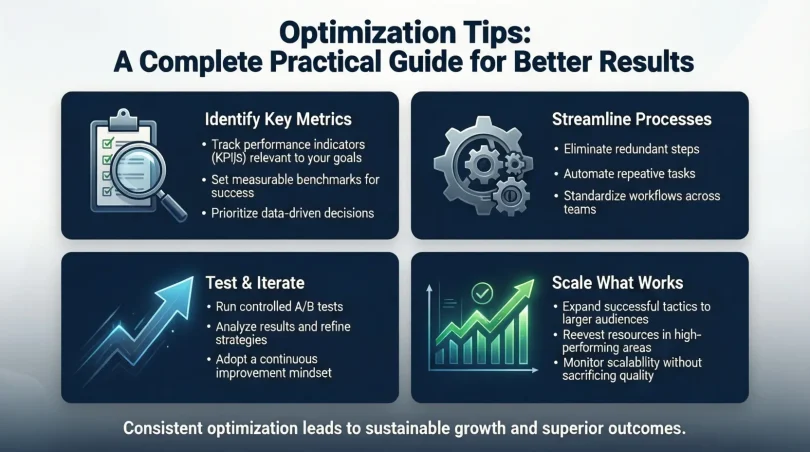
One key aspect of optimization is measurement. You cannot improve what you do not understand. Optimization Tips often start with analyzing current performance. After that, you apply small, controlled changes and observe the results. This process helps you avoid guesswork.
Another important idea is balance. Over-optimization can cause problems, while under-optimization leads to poor performance. The goal is to find the right level where systems run smoothly and users stay satisfied.
In short, Optimization Tips are practical instructions that help you achieve better outcomes with less waste. They are useful for beginners who need structure and for intermediate users who want to refine their skills.
Why is Optimization Tips Important?

Optimization Tips are important because they directly affect quality, efficiency, and growth. Without optimization, even good ideas can fail due to poor execution. When systems are not optimized, they waste time, energy, and resources.
One major reason optimization matters is competition. Today, users expect fast, simple, and reliable experiences. If your process or content is slow or confusing, people move on quickly. Optimization Tips help you meet these expectations.
Another reason is scalability. Optimized systems are easier to grow. When your foundation is strong, adding more work does not create chaos. Optimization Tips help you prepare for future expansion without stress.
Optimization also improves decision-making. When you analyze performance and apply improvements, you understand what works and what does not. This clarity reduces mistakes and increases confidence.
Finally, optimization supports long-term success. Quick fixes may bring short results, but optimization creates stable improvement. This makes Optimization Tips valuable for anyone serious about progress and consistency.
Detailed Step-by-Step Guide
Step 1: Define Clear Goals
The first step in applying Optimization Tips is setting clear goals. You must know what you want to improve before making changes. Goals give direction and prevent wasted effort.
Start by writing down one main objective. For example, faster performance, better engagement, or smoother workflow. Keep the goal simple and measurable. Clear goals make optimization focused and effective.
Avoid trying to optimize everything at once. This often leads to confusion. Instead, choose one area and work on it fully before moving to the next.
Step 2: Analyze Current Performance
Before making improvements, understand your current situation. Analysis is a core part of Optimization Tips. Look at how things work right now and identify weak points.
Ask simple questions. Where do delays happen? What causes errors? Which steps feel unnecessary? Honest answers reveal opportunities for optimization.
Use basic tracking methods if possible. Even simple notes can help. The goal is awareness, not perfection.
Step 3: Identify Bottlenecks
Bottlenecks are points where progress slows down. Optimization Tips focus heavily on removing or reducing these barriers. A single bottleneck can affect the entire system.
Look for repeated problems. If one step always takes longer, it may need improvement. Bottlenecks often appear where instructions are unclear or tools are outdated.
Once identified, list possible solutions. Do not apply them yet. Planning comes before action in proper optimization.
Step 4: Apply Small Changes
One common mistake is making big changes too fast. Optimization Tips recommend small, controlled improvements. This reduces risk and makes results easier to measure.
Change one element at a time. For example, simplify a process step or reorganize content structure. Then observe the outcome.
Small changes are easier to reverse if needed. This approach builds confidence and accuracy.
Step 5: Test and Measure Results
Testing is essential in optimization. After applying a change, measure its impact. Optimization Tips are based on results, not assumptions.
Compare performance before and after the change. Look for improvement in speed, clarity, or output quality. If results improve, keep the change. If not, adjust or revert.
Testing helps you learn what truly works. Over time, this builds strong optimization skills.
Step 6: Document Improvements
Documentation is often ignored, but it is very important. Optimization Tips include keeping records of changes and results.
Write down what you changed and why. Note the results clearly. This prevents repeating mistakes and helps future planning.
Good documentation also makes it easier to teach others or scale your system later.
Step 7: Repeat the Process
Optimization is not a one-time task. It is a continuous cycle. Optimization Tips work best when applied regularly.
After completing one round, return to analysis. Look for new improvement areas. With each cycle, performance becomes stronger and more stable.
Consistency turns optimization into a habit rather than a chore.
Benefits of Optimization Tips
- Improve efficiency and save time
- Reduce errors and confusion
- Increase performance and output quality
- Make systems easier to manage
- Support long-term growth and stability
- Help beginners build strong foundations
- Allow intermediates to refine existing systems
Disadvantages / Risks
- Over-optimization can reduce flexibility
- Poor analysis can lead to wrong changes
- Too many changes at once can cause instability
- Lack of testing may hide real problems
- Ignoring user needs can harm results
Common Mistakes to Avoid
One common mistake is skipping the analysis phase. Many people jump directly into changes without understanding the problem. Optimization Tips always start with clarity.
Another mistake is copying strategies blindly. What works in one situation may fail in another. Optimization must match your specific needs.
Some people also expect instant results. Optimization is gradual. Patience is necessary for real improvement.
Finally, ignoring feedback can hurt optimization. Always consider user experience and real-world results.
FAQs
What are Optimization Tips used for?
Optimization Tips are used to improve efficiency, performance, and results. They help remove weak points and strengthen systems without adding unnecessary complexity.
Are Optimization Tips only for technical users?
No, Optimization Tips are for everyone. Beginners can use them to build good habits, while intermediate users can refine and improve existing processes.
How often should optimization be done?
Optimization should be ongoing. Small reviews done regularly work better than rare major changes.
Can optimization reduce quality?
If done incorrectly, yes. Over-optimization may remove useful features. Balanced Optimization Tips focus on improvement without loss.
Do Optimization Tips guarantee success?
They increase the chances of success but do not guarantee it. Results depend on proper application and consistent effort.
Is testing really necessary?
Yes, testing is critical. Without testing, you cannot know if an optimization actually worked or caused new problems.
Expert Tips & Bonus Points
One expert tip is to focus on user perspective. Optimization Tips work best when they improve real experience, not just internal metrics.
Another tip is to keep learning. Optimization methods evolve over time. Stay open to new ideas and improvements.
Use checklists to maintain consistency. Simple checklists support long-term optimization success.
Finally, review your optimization results monthly. Regular reviews keep systems healthy and aligned with goals.
Conclusion
Optimization Tips are powerful tools for improving performance, efficiency, and results in a structured and reliable way. They help beginners build strong systems and allow intermediate users to refine what they already have. Instead of guessing or making random changes, optimization provides a clear path based on analysis, testing, and continuous improvement.
The true value of Optimization Tips lies in consistency. Small improvements, applied regularly, create lasting progress. When you set clear goals, analyze honestly, and test carefully, optimization becomes simple and effective. It reduces stress and increases confidence because you understand why changes work.
Remember that optimization is not about perfection. It is about balance and clarity. Avoid rushing and focus on meaningful improvements. With patience and discipline, Optimization Tips can transform the way you work and help you achieve sustainable success over time.