
Introduction
Learning something new can feel confusing, especially when information is scattered or too complex. This is where step-by-step tutorials become extremely helpful. They guide learners through a process in a clear and logical way, making even difficult tasks easier to understand. Instead of guessing what to do next, you follow a structured path that leads you from start to finish with confidence.
In today’s digital world, people rely on tutorials to learn skills quickly. Whether it is using software, fixing a problem, learning a new tool, or understanding a concept, tutorials save time and reduce frustration. Beginners feel supported, while intermediate learners can refine their skills without feeling overwhelmed. A good tutorial does not rush the learner. It explains each step in simple language and builds understanding gradually.
Another reason step-by-step tutorials are popular is their flexibility. You can pause, repeat steps, or move ahead at your own pace. This learning style works well for students, professionals, and even hobbyists. As more people prefer self-learning, tutorials have become a trusted method for gaining knowledge.
In this article, you will learn what step-by-step tutorials are, why they are important, and how to use them correctly. You will also explore benefits, risks, common mistakes, and expert tips. By the end, you will clearly understand how step-by-step tutorials can improve learning and make complex tasks feel manageable.
What is Step-by-Step Tutorials?
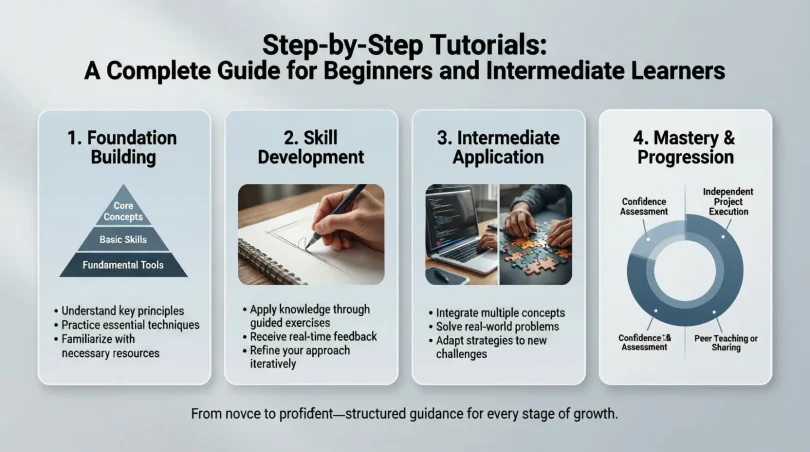
Step-by-step tutorials are structured guides that explain a process in a clear sequence of actions. Each step builds on the previous one, helping the learner move forward without confusion. The main goal is to break down complex information into smaller, easy-to-follow parts.
These tutorials are commonly used in education, technology, and professional training. For example, a software tutorial may explain installation first, then basic setup, and finally advanced features. This gradual approach ensures that learners do not miss important details.
Step-by-step tutorials often include explanations, examples, and sometimes visuals. They focus on clarity and simplicity rather than advanced language. This makes them suitable for beginners while still being useful for intermediate learners.
Why is Step-by-Step Tutorials Important?

Step-by-step tutorials are important because they remove uncertainty from learning. Instead of feeling lost, learners know exactly what to do next. This structured approach builds confidence and encourages progress.
Another key reason is efficiency. Tutorials save time by presenting information in the right order. Learners do not need to search multiple sources or guess missing steps. Everything is explained clearly in one place.
They also support independent learning. People can learn new skills without constant help from others. This is especially useful for online learning and professional development.
Most importantly, step-by-step tutorials reduce errors. When steps are followed correctly, the chances of mistakes are much lower. This makes tutorials valuable for technical and practical tasks.
Detailed Step-by-Step Guide
Step 1: Define the Goal Clearly
Before starting any tutorial, identify the exact goal. Knowing what you want to achieve keeps the learning process focused. A clear goal also helps you measure success at the end.
Step 2: Gather Required Tools or Information
Every task needs certain tools or knowledge. Collect everything in advance to avoid interruptions. This step prepares you for smooth learning.
Step 3: Follow Instructions in Order
The strength of step-by-step tutorials lies in sequence. Skipping steps can cause confusion or errors. Always follow instructions in the given order for best results.
Step 4: Understand Each Step
Do not rush through the tutorial. Take time to understand why each step is necessary. This builds deeper knowledge instead of surface learning.
Step 5: Practice Along the Way
Apply what you learn immediately. Practice reinforces understanding and helps you remember steps more effectively.
Step 6: Review and Adjust
After completing the tutorial, review the process. Identify areas where you struggled and repeat those steps if needed. This improves mastery.
Benefits of Step-by-Step Tutorials
- Easy to understand for beginners
- Saves time and effort
- Reduces learning stress
- Improves accuracy and results
- Supports self-paced learning
- Builds confidence gradually
Disadvantages / Risks
- Can feel slow for advanced users
- Over-reliance may limit creativity
- Poorly written tutorials cause confusion
- Not all tutorials are up to date
- Some steps may not fit every situation
Common Mistakes to Avoid
One common mistake is skipping steps. Even simple steps matter and provide context. Another mistake is multitasking while learning, which reduces focus. Learners also ignore practice, thinking reading is enough. Finally, using outdated tutorials can lead to incorrect results.
FAQs
What makes a good step-by-step tutorial?
A good tutorial is clear, simple, and well-structured. It explains each step in order and avoids unnecessary complexity.
Are step-by-step tutorials suitable for all learners?
Yes, they are suitable for beginners and intermediate learners. Advanced users may still find them useful for quick reference.
How long should a tutorial be?
The length depends on the topic. A good tutorial is as long as needed to explain all steps clearly without extra content.
Can tutorials replace formal education?
Tutorials support learning but do not fully replace formal education. They work best as a practical learning tool.
Why do some tutorials fail?
Tutorials fail when they lack clarity, skip steps, or assume prior knowledge that learners do not have.
How can I improve my learning using tutorials?
Practice regularly, take notes, and repeat steps. Applying what you learn improves retention.
Expert Tips & Bonus Points
Experts recommend choosing tutorials that match your skill level. Always read the overview before starting. Take breaks to avoid overload. Keep notes for future reference. Finally, practice the steps without looking to test understanding.
Conclusion
Step-by-step tutorials are one of the most effective ways to learn new skills in a structured and stress-free manner. They simplify complex tasks by breaking them into manageable steps, making learning accessible to beginners and useful for intermediate learners. With clear goals, proper guidance, and practical examples, tutorials help learners build confidence and accuracy.
However, the quality of a tutorial matters. Well-written step-by-step tutorials encourage understanding, while poor ones create confusion. Learners should choose reliable guides, follow steps carefully, and practice regularly. Avoid skipping steps and always review your progress.
In a fast-paced world where self-learning is essential, step-by-step tutorials offer a dependable solution. They empower individuals to learn independently, improve skills, and achieve goals efficiently. When used correctly, they turn learning into a smooth and rewarding experience.