
Introduction
In today’s digital world, software is a daily need. We use it for work, study, communication, creativity, and entertainment. However, not everyone can afford paid tools. This is where Best Free Software becomes important. Free software allows people to complete tasks without spending money, while still enjoying powerful features. From students to small business owners, free tools help users stay productive and organized.
Many beginners think free software is low quality. That is not true anymore. Today, many free tools are developed by skilled teams and large communities. They are safe, easy to use, and often updated. Intermediate users also prefer free software because it gives flexibility and reduces costs. With the right choice, free software can perform almost the same tasks as paid versions.
The challenge is choosing the right tool. Not all free software is reliable or secure. Some may have limited features, while others may show ads or collect data. This article will guide you step by step. You will learn what Best Free Software means, why it matters, how to use it correctly, and what mistakes to avoid. By the end, you will feel confident choosing free tools for your needs.
This guide is written in simple English, using clear examples and practical advice. Whether you are just starting or already have some experience, this article will help you make smart software choices.
What is Best Free Software?
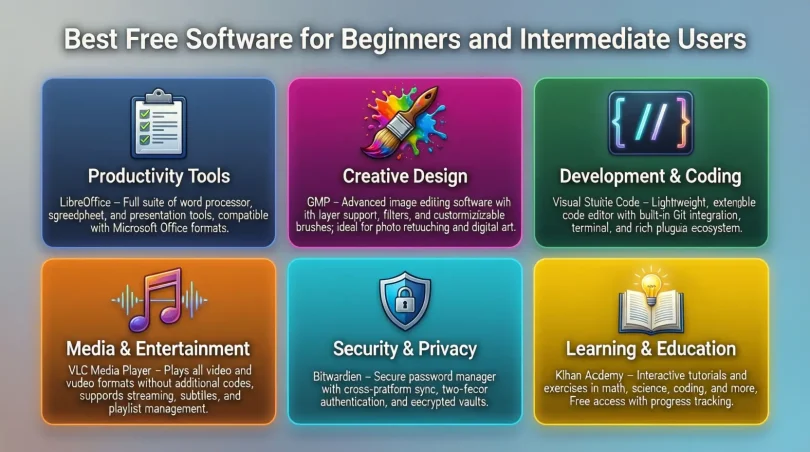
Best Free Software refers to programs and applications that users can download and use without paying money. These tools offer useful features that help people complete tasks such as writing, designing, editing, coding, or managing files. The word “best” means the software is reliable, secure, easy to use, and regularly updated.
Free software comes in different types. Some are completely free forever. Others are freemium, meaning basic features are free, while advanced options require payment. Many open-source tools are also free, allowing users to view or modify the code.
The goal of Best Free Software is to give users value without cost. It helps people learn new skills, improve productivity, and save money. When chosen wisely, free software can meet personal and professional needs without compromise.
Why is Best Free Software Important?

Best Free Software plays a big role in modern life. First, it reduces financial pressure. Not everyone can afford monthly subscriptions or expensive licenses. Free tools give equal opportunities to students, freelancers, and small businesses.
Second, free software supports learning. Beginners can practice without fear of wasting money. Intermediate users can test tools before upgrading. This encourages skill development and experimentation.
Third, Best Free Software increases accessibility. People from different regions and income levels can use technology freely. This helps close the digital gap and promotes innovation.
Finally, free software often has strong communities. Users share tips, tutorials, and updates. This makes problem-solving easier and improves user experience over time.
Detailed Step-by-Step Guide
Step 1: Identify Your Needs
Before choosing any software, list your needs. Ask yourself what task you want to complete. For example, writing documents, editing images, or managing files. Knowing your goal helps you avoid unnecessary tools.
Step 2: Search Trusted Sources
Look for software from official websites or well-known platforms. Trusted sources reduce the risk of malware. Avoid unknown websites that offer modified versions.
Step 3: Check Features Carefully
Compare features with your requirements. Best Free Software should meet your basic needs without forcing upgrades. Read feature lists and user descriptions.
Step 4: Review System Requirements
Make sure your device supports the software. Some tools need more memory or newer systems. Choosing compatible software avoids performance issues.
Step 5: Read User Feedback
User reviews help you understand real experiences. Look for comments about stability, ease of use, and updates. Balanced feedback is more reliable than extreme opinions.
Step 6: Download and Install Safely
During installation, read each step carefully. Avoid extra offers or bundled programs. Best Free Software should not force unwanted additions.
Step 7: Learn Basic Usage
After installation, explore settings and tutorials. Many free tools offer guides. Learning basics improves efficiency and confidence.
Step 8: Keep Software Updated
Updates improve security and features. Enable automatic updates if available. This keeps your free software safe and reliable.
Benefits of Best Free Software
- Saves money and reduces expenses
- Easy access for beginners and students
- Supports learning and skill development
- Often updated by active communities
- Available for multiple platforms
- Flexible and easy to replace
- Encourages experimentation
Disadvantages / Risks
- Limited advanced features
- Possible ads in free versions
- Less customer support
- Compatibility issues with paid tools
- Risk of fake or unsafe downloads
- Slower updates in some cases
Common Mistakes to Avoid
One common mistake is downloading software from unknown sources. This can lead to security problems. Always choose official platforms.
Another mistake is ignoring system requirements. Installing heavy software on weak devices causes slow performance.
Some users install too many tools at once. This creates confusion and clutter. Focus on one solution at a time.
Finally, many people skip updates. Outdated software may have security risks. Regular updates are important for safety.
FAQs
What makes software truly free?
Truly free software allows users to use it without payment. Some may also allow modification and sharing. Always check license terms.
Is free software safe to use?
Yes, if downloaded from trusted sources. Best Free Software is usually tested and updated regularly.
Can free software replace paid tools?
In many cases, yes. For basic and intermediate tasks, free tools often provide enough features.
Do free tools collect user data?
Some may collect limited data. Always read privacy policies and settings carefully.
Are updates free forever?
Most free software offers free updates. However, some tools may later change policies.
Can businesses use free software legally?
Yes, but businesses should check licenses. Some free tools have restrictions for commercial use.
Expert Tips & Bonus Points
Always test software before relying on it fully. Keep backups of important files. Join user communities for tips and updates. Use one main tool per task to stay organized. Review permissions regularly to protect privacy.
Conclusion
Best Free Software has changed how people use technology. It provides powerful tools without financial burden. Beginners can learn comfortably, while intermediate users can work efficiently. With careful selection, free software can support daily tasks, creative projects, and professional work.
The key is making smart choices. Understand your needs, choose trusted sources, and keep software updated. Avoid common mistakes and stay informed. Free does not mean low quality. Many free tools are built with care and expertise.
As technology continues to grow, free software will become even more important. It promotes learning, creativity, and equal access. By following this guide, you can confidently choose the Best Free Software for your needs and enjoy reliable performance without spending money.