
Introduction
Security Software Tests are essential in today’s digital world where cyber threats are growing every day. From personal computers to business networks, everyone relies on security tools to stay safe online. However, installing security software alone is not enough. You must also understand how well that software actually works. This is where Security Software Tests play a critical role.
Security Software Tests help users check whether antivirus programs, firewalls, and other protection tools can truly detect, block, and remove threats. These tests analyze performance, accuracy, speed, and reliability under real-world conditions. For beginners, they offer clarity when choosing the right security solution. For intermediate users, they provide deeper insight into strengths and weaknesses.
In the first few moments after a cyberattack, the quality of your security software decides the outcome. A tested solution responds faster and more accurately. Without testing, users rely only on marketing claims, which can be misleading. Therefore, Security Software Tests create transparency and trust.
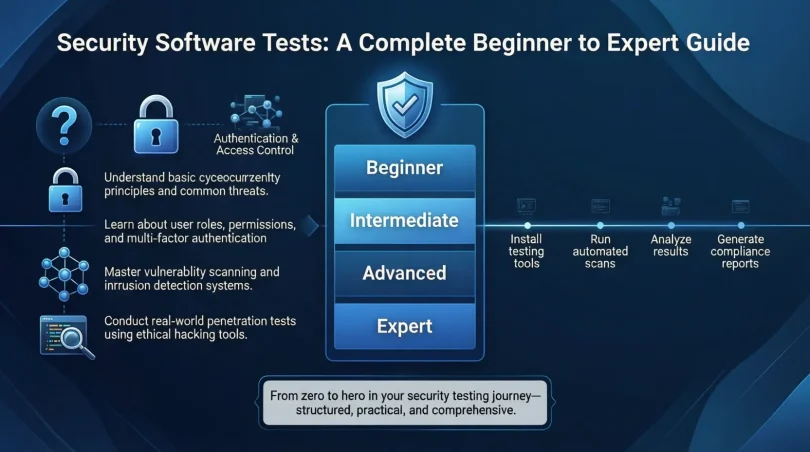
This guide explains Security Software Tests in a clear and simple way. You will learn what they are, why they matter, how they are performed, and how to use results wisely. Whether you protect a single device or manage multiple systems, this knowledge will help you make smarter decisions and stay secure online.
What is Security Software Tests?
Security Software Tests are structured evaluations used to measure how well security programs protect systems from digital threats. These tests focus on antivirus software, firewalls, anti-malware tools, endpoint protection, and internet security suites.
The main goal of Security Software Tests is to check real performance instead of promises. They examine how software handles viruses, ransomware, spyware, phishing attacks, and zero-day threats. Testing also measures system impact, scanning speed, and false alerts.
There are different testing methods used by experts. Some tests simulate real-world attacks, while others use controlled environments. In both cases, the software must prove it can detect threats without slowing down the system.
Security Software Tests are not limited to professionals. Home users also benefit because test results guide better buying decisions. Businesses depend on them to meet compliance standards and reduce risk. In short, Security Software Tests provide a clear picture of how secure your digital environment truly is.
Why is Security Software Tests Important?

Security Software Tests are important because cyber threats evolve constantly. Hackers create new malware daily, and outdated protection can fail silently. Testing ensures that security tools stay effective against modern attacks.
One major reason Security Software Tests matter is trust. Users need proof that a product works as expected. Tests remove guesswork and replace it with data-driven results. This is especially important for businesses handling sensitive information.
Another reason is performance balance. Some security tools offer strong protection but slow down systems. Testing reveals whether the software maintains speed while staying secure. This balance is crucial for productivity.
Security Software Tests also help compare different solutions fairly. Instead of relying on advertisements, users can review objective results. This leads to better investments and fewer regrets.
Ultimately, Security Software Tests protect data, privacy, finances, and reputation. Without testing, security becomes a gamble. With testing, it becomes a strategy.
Detailed Step-by-Step Guide
Step 1: Define Testing Objectives
Before running Security Software Tests, define clear goals. Decide what you want to measure, such as malware detection, system impact, or response time. Clear objectives ensure meaningful results.
Different users have different needs. Home users may focus on ease of use and basic protection. Businesses may prioritize advanced threat detection and scalability. Matching objectives with needs improves accuracy.
Step 2: Select Testing Environment
Choose a controlled and secure testing environment. This could be a virtual machine or isolated system. Never test malware on a primary device.
A clean environment ensures that results are not affected by existing issues. It also allows repeated testing under identical conditions, which improves reliability.
Step 3: Prepare Threat Samples
Security Software Tests require realistic threat samples. These include viruses, trojans, ransomware, and phishing simulations. Using updated samples is critical because old threats do not reflect current risks.
Threat samples must be handled carefully. Only trusted sources should be used to avoid accidental spread.
Step 4: Install and Configure Software
Install the security software using default settings first. This reflects how most users operate. Later, advanced configurations can be tested separately.
Make sure updates are enabled. Testing outdated versions gives misleading results and reduces relevance.
Step 5: Run Detection Tests
Detection tests measure how well the software identifies threats. These tests introduce malware samples and record detection rates.
High detection rates indicate strong protection. However, false positives must also be monitored. Too many alerts reduce user trust and efficiency.
Step 6: Perform Real-Time Protection Tests
Real-time Security Software Tests simulate live attacks. These include malicious downloads, infected websites, and email threats.
Real-time performance shows how quickly the software reacts. Fast response reduces damage and prevents data loss.
Step 7: Measure System Performance Impact
Security software should protect without slowing down the system. Performance tests measure boot time, file access speed, and application responsiveness.
Balanced software delivers strong protection with minimal system impact. This is especially important for older devices.
Step 8: Evaluate Usability and Interface
Usability tests check how easy the software is to use. Clear alerts, simple controls, and helpful guidance improve user experience.
Even powerful software fails if users cannot understand it. Security Software Tests must include human interaction evaluation.
Step 9: Analyze Reporting and Logs
Good security software provides detailed reports. These logs help users understand threats and actions taken.
Testing report clarity ensures that users can make informed decisions after an incident.
Step 10: Compare Results and Score Performance
After completing tests, compare results across different tools. Use consistent scoring methods to ensure fairness.
Security Software Tests often use percentage scores, ratings, or pass-fail results. Clear comparison simplifies decision-making.
Benefits of Security Software Tests
- Improves confidence in security solutions
- Identifies strengths and weaknesses clearly
- Helps choose the right software
- Reduces risk of cyber attacks
- Ensures updated threat protection
- Balances security and performance
- Supports compliance requirements
- Saves money by avoiding poor products
Disadvantages / Risks
- Testing requires technical knowledge
- Improper handling of malware can cause damage
- Results may vary across environments
- Time-consuming for beginners
- Overreliance on scores can be misleading
- Limited tests may miss rare threats
Common Mistakes to Avoid
One common mistake is testing on a live system. This can lead to data loss or infection. Always use isolated environments.
Another mistake is ignoring updates. Security Software Tests must use the latest versions to remain accurate.
Some users rely only on detection rates. However, usability and performance are equally important.
Testing with outdated threat samples is another error. Cyber threats change rapidly, so tests must stay current.
Finally, comparing results from different test standards can confuse users. Always compare similar testing methods.
FAQs
What are Security Software Tests used for?
Security Software Tests are used to evaluate how effectively security tools protect systems from cyber threats while maintaining performance and usability.
Can beginners perform Security Software Tests?
Yes, beginners can perform basic tests using safe environments and clear guides. Advanced testing may require technical expertise.
How often should Security Software Tests be done?
Tests should be performed regularly, especially after major updates or when new threats emerge.
Do Security Software Tests guarantee full protection?
No test guarantees complete safety. However, testing significantly reduces risk and improves preparedness.
Are free security tools tested the same way?
Yes, free and paid tools can undergo the same Security Software Tests, allowing fair comparison.
Why do different tests show different results?
Results vary due to testing methods, environments, and threat samples used during evaluation.
Expert Tips & Bonus Points
Always test software under real-world conditions. Simulated environments are helpful, but realistic scenarios reveal true performance.
Combine multiple test types for balanced evaluation. Detection, performance, and usability together give a complete picture.
Document all results carefully. This helps track improvements and identify recurring issues.
Stay informed about new threats. Updated knowledge improves test relevance.
Avoid relying on a single test result. Patterns over time matter more than one score.
Conclusion
Security Software Tests are a powerful tool for protecting digital environments in an increasingly dangerous online world. They move security decisions from guesswork to evidence-based action. By testing security tools properly, users gain insight into real performance, reliability, and usability.
For beginners, Security Software Tests simplify complex choices and prevent costly mistakes. For intermediate users, they provide deeper understanding and better control. Businesses rely on these tests to protect data, maintain compliance, and build trust.
Testing also encourages software developers to improve quality. When products are tested openly, standards rise across the industry. This benefits everyone, from individual users to large organizations.
In the end, security is not just about installing software. It is about verifying that protection works when it matters most. Security Software Tests provide that verification. By applying the steps, tips, and knowledge shared in this guide, you can make smarter decisions and create a safer digital future with confidence and clarity.